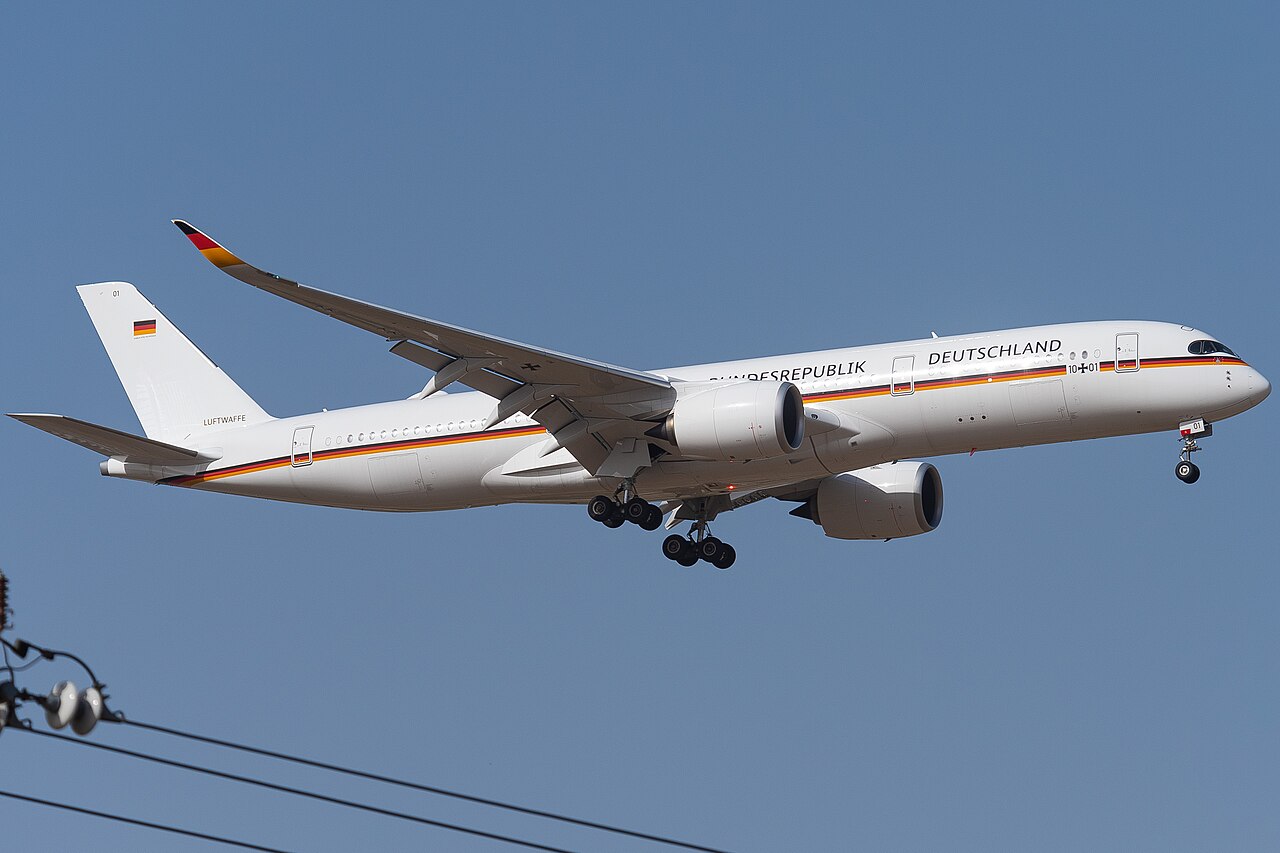
From A340 to A350: The Evolution of Germany's Konrad Adenauer Fleet
The skies above Germany have witnessed a significant evolution in its official long-haul air travel fleet. For years, the workhorse for high-ranking government officials, including chancellors, was the Airbus A340, notably the aircraft christened "Konrad Adenauer." This era, while pivotal, was not without its trials. Today, a new chapter has unfolded with the majestic Airbus A350 taking its place, symbolizing a leap forward in technology, reliability, and capability. This transition from the A340 to the state-of-the-art A350 marks not just an aircraft upgrade, but a comprehensive redefinition of Germany's diplomatic presence in the global arena.The A340 Era: Navigating Turbulence and Technical Glitches
The Airbus A340, specifically the "Konrad Adenauer," served as a crucial aerial office for the German government for an extended period. However, its tenure was punctuated by a series of notable technical incidents that brought to light the complexities and challenges of maintaining a specialized government fleet. Perhaps the most publicized of these was the incident involving then-Chancellor Angela Merkel en route to the G20 summit in Argentina in November 2018. During this critical flight, the "Konrad Adenauer" experienced a complete failure of its digital communication system and other vital electronics. Investigations later suggested a cascade of events: a defective central switching unit, known as a Transformer Rectifier Unit (TRU), knocked out not one but two radio systems designed to be redundant. Further complicating matters, pilots reportedly lacked sufficient information about a newly installed digital communication system and couldn't restart it following a power outage. This led to a crucial loss of communication capabilities and the inability to jettison fuel to lighten the aircraft for an emergency landing, forcing the plane to return to Cologne/Bonn. The incident resulted in Merkel and her delegation having to take a commercial flight, a diplomatic inconvenience that underscored the urgent need for impeccable operational reliability. While Lufthansa Technik, responsible for the aircraft's conversion and maintenance, disputed claims of negligence regarding documentation, and the Ministry of Defense attributed the failure solely to a component defect, the event sparked significant debate about the readiness and maintenance protocols for the government fleet. The A340 fleet, which also included the "Theodor Heuss," saw modifications and component replacements in response to these incidents. Prior to this high-profile event, the "Konrad Adenauer" had also been incapacitated by a less conventional foe: rodents in Indonesia, further highlighting the diverse challenges faced by these globe-trotting diplomatic assets. These episodes provided invaluable lessons, paving the way for a more robust and technologically advanced successor. For more on this critical moment, read Merkel's A340 Nightmare: Inside the Konrad Adenauer Failure.Understanding the Unique Demands of Government Aircraft
Unlike commercial airliners designed for mass passenger transport, government aircraft like the "Konrad Adenauer" are purpose-built mobile command centers. Their design prioritizes secure communications, onboard office facilities, meeting spaces, and comfortable quarters for dignitaries and their staff. This requires extensive modifications beyond a standard commercial setup, impacting everything from wiring and power supply to the internal layout and cabin features. The Konrad Adenauer Flugzeug Innen of the A340 era, while state-of-the-art for its time, likely featured secure communication suites, private cabins for the Chancellor, and designated areas for staff and press, all built to withstand the rigors of frequent international travel. The issues encountered with the A340 demonstrated that even with such bespoke modifications, the underlying systems require flawless integration and comprehensive pilot training.The Dawn of a New Era: The Airbus A350 "Konrad Adenauer"
The recurring challenges with the A340 fleet ultimately accelerated the move towards a more modern and reliable solution. This materialized in the form of the Airbus A350, a next-generation long-haul wide-body aircraft. The arrival of the new "Konrad Adenauer," an A350, marked a significant milestone for the German government fleet. The official naming ceremony, held by Lufthansa Technik, which also carried out the extensive governmental modifications, was a symbolic event, attended by Konrad Adenauer's grandson, reinforcing the continuity of a distinguished legacy with a forward-looking vision. This new A350 was officially handed over to the German Air Force (Luftwaffe) at Cologne-Wahn, designated to serve the Federal Ministry of Defence for long-distance political and parliamentary flights. The choice of the A350 was a strategic one, aimed at enhancing operational reliability, improving efficiency, and providing an unparalleled level of safety and comfort for Germany's leaders. It represents a clear commitment to ensuring that Germany's diplomatic representatives can conduct their duties seamlessly, without the disruption of technical setbacks.Redefining German Air Travel: The A350's Interior and Advanced Capabilities
The Konrad Adenauer Flugzeug Innen of the new A350 represents a dramatic leap forward from its A340 predecessor. While specific detailed schematics of the interior are often kept confidential for security reasons, it's understood to be meticulously designed to meet the highest standards of a modern, secure, and fully functional aerial office. Expectations for the A350's interior include:- State-of-the-Art Communication Hub: Significantly upgraded secure communication systems, including satellite links, encrypted networks, and advanced data transmission capabilities, ensuring uninterrupted contact with Berlin and global partners. This directly addresses the critical failures experienced with the A340.
- Flexible Seating Arrangements: A mix of private office suites for the Chancellor and key ministers, dedicated meeting rooms, and comfortable seating areas for staff, press, and accompanying delegations. The focus is on functionality and privacy.
- Enhanced Comfort and Amenities: Given the A350's advanced cabin pressurization and air filtration systems, passengers will experience reduced fatigue on long-haul flights. High-quality finishes, ergonomic seating, and modern entertainment options, albeit tailored for official use rather than leisure, contribute to a more productive and pleasant journey.
- Advanced Avionics and Reliability: The A350 boasts significantly more modern and integrated avionics systems, which inherently reduce the risk of the kinds of component failures seen in older aircraft. Its design emphasizes redundancy and ease of maintenance, crucial for a fleet that demands near-perfect operational readiness.
- Fuel Efficiency and Sustainability: The A350 is renowned for its fuel efficiency, consuming up to 25% less fuel than previous generation aircraft like the A340. This not only offers cost savings but also aligns with contemporary environmental considerations, projecting a more responsible image for government travel.
Practical Insights for Government Fleet Management
- Proactive Maintenance and Upgrades: Relying on aging systems, even with regular maintenance, can lead to unforeseen issues. A proactive upgrade strategy, considering technological obsolescence, is crucial.
- Comprehensive Training and Documentation: The A340 incident highlighted the absolute necessity of informing operational personnel (pilots) about all system modifications and providing thorough training. Detailed documentation must be readily accessible and understood.
- Redundancy and System Integration: While redundancy is built into modern aircraft, the failure of a single component impacting multiple systems underscores the importance of robust, independent backup solutions and flawless integration testing.
- Clear Communication and Accountability: Conflicting reports after the A340 incident highlighted the need for transparent communication channels and clear accountability in investigations involving multiple stakeholders (operators, manufacturers, maintenance providers).
The journey from the Airbus A340 "Konrad Adenauer" to its sophisticated A350 successor is a compelling narrative of adaptation and progress in Germany's official air transport. The challenges faced with the older fleet served as critical catalysts for change, underscoring the vital importance of reliable, secure, and technologically advanced air travel for national leaders. The new A350, with its cutting-edge design and significantly enhanced Konrad Adenauer Flugzeug Innen, not only resolves past issues but propels Germany's government air travel into a new era of efficiency, security, and diplomatic effectiveness. This evolution ensures that Germany's representatives can navigate the complexities of global diplomacy with the utmost confidence, supported by a fleet that truly reflects the nation's technological prowess and commitment to seamless international engagement.